

Having Side Effects from Letrozole, Anastrozole and Tamoxifen? Start Exercise as Medicine.

Joint pain or fatigue stopping you from exercising?
AIMSS- Aromatase Inhibitor associated Musculoskeletal Syndrome is common.
You’re not alone. 50% of those with breast cancer taking hormone therapy are impacted by joint pain and fatigue. After treatment often there is little energy left for what remains. The last thing desired is more medication; but yet for many women with breast cancer, hormone therapy and hence menopause awaits. Coupled with pressure to return to work, or navigate disability funding, the final lag can often be overwhelming.
Post-treatment symptoms are common and often get attention once the pace of treatment slows down. One can use the analogy of 'long haul cancer syndrome', akin to long haul covid. Symptoms related to long haul cancer often remain unsupported and can include pain, fatigue or feeling flatlined amongst other breast cancer related conditions.
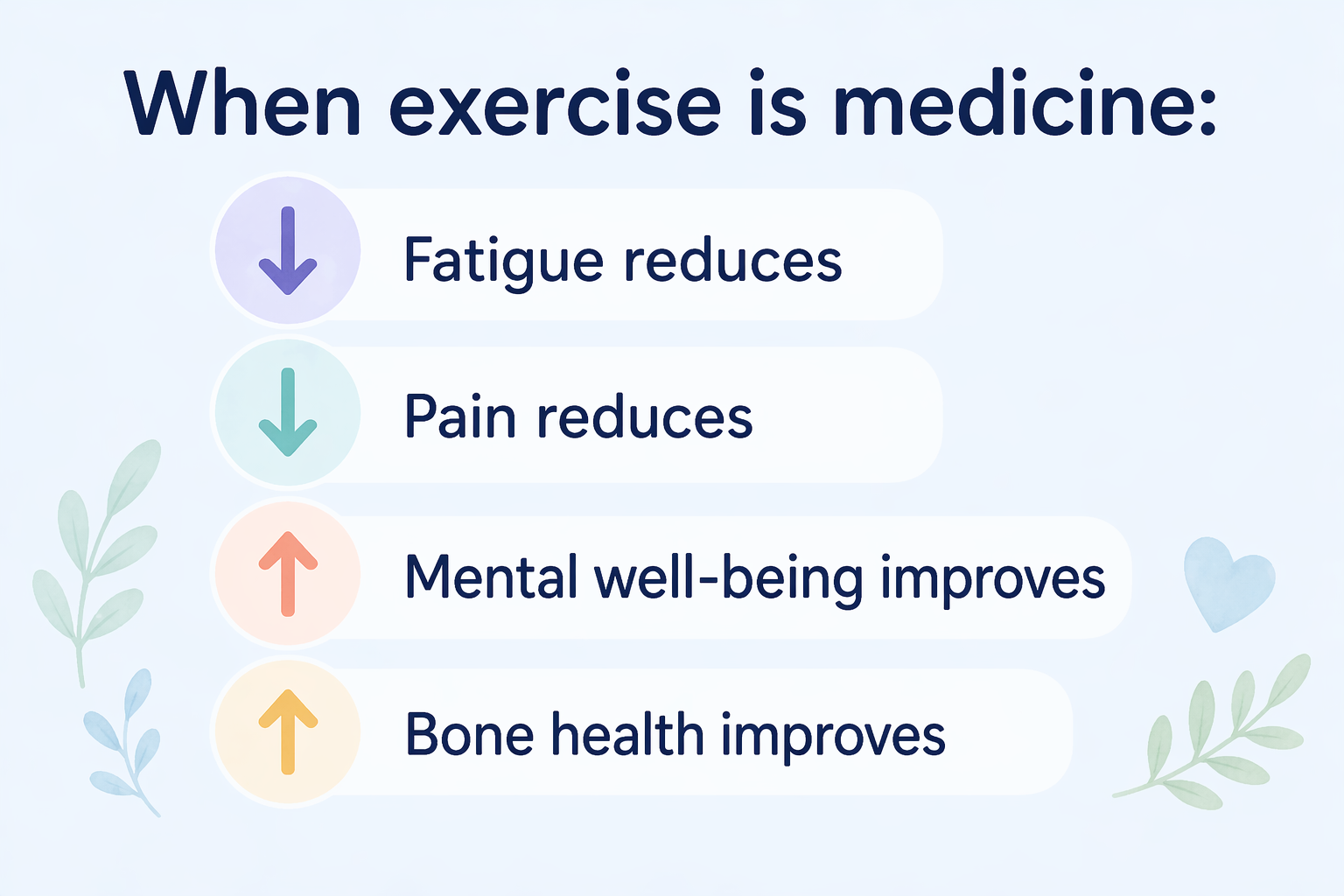
Data supports that greater than 50% of women who take hormone therapy for hormone sensitive breast cancer report side effects. If you are finding yourself overwhelmed with symptoms of hormone therapy such as bone density loss, fatigue or joint pain, this blog will detail how to practice exercise as medicine.
Why Consider Hormone Therapy
Treatment involving hormone therapy will inevitably impact your estrogen levels pushing you into early menopause. Fortunately, hormone therapies have good efficacy increasing survivorship rates, at times up to 50%. Ask your oncologist about your specific hormone therapy reoccurrence risk statistic, at times data is available specific to your cancer and hormone therapy type.
Know the statistics; it will help you decide if hormone therapy is right for you
At times patients will trial a brand of hormone therapy and find the symptom burden too great. Symptoms are often worse for the first 3 months, and then tend to greatly tapper off. At times symptoms can be unmanageable after 3 months such as poor mental health, severe joint pain or persistent fatigue. In these cases, contact your medical oncologist. At times, there are options to trial a different type which may be more tolerated.
Types of Hormone Therapy
-
Function: block estrogen receptors or production and reduce estrogen conversion
Population prescribed: often post-menopausal and estrogen positive cancers
Examples: Anastrozole/Arimedex, Aromasin/Exemestane, Letrozole/Femara, Vorozole, and Testolactone
Common side effects: Arthralgia/myalgia, hot flashes, poor bone health, nausea, and significant reduction in estrogen
-
Other similar types: Selective Estrogen Receptor Modulator (SERMS) Cycling-Dependent Kinase (CDK)
Function: blocks estrogen receptors, binds to estrogen and reduces ovarian estrogen
Population prescribed: pre-menopausal and estrogen +ve cancer
Examples: Tamoxifen/Nolvadex, Faslodex, Nolvadex and Soltamox and Ibrance/Palbociclib
Common side effects: hot flashes, joint pain, sleep disturbances and nausea
-
Calcium D-glucarate and Diindolylmethane (DIM) found in cruciferous vegetables (broccoli, cabbage, kale, cauliflower etc.)
Omega 3 fatty acids (fatty fish, flax seeds)
Catechins (Green Tea)
Estrogen receptor inhibitor (Reishi mushroom)
*Always consult with your physician prior to taking any supplements
-
Although a young area of science, this study used bio-identical hormone combinations in post-menopausal women to help reduce cancer risk while lessening the symptom burden that often comes from AI's.
As AI's have potentially negative impacts on the bone and cardiovascular system, there is need for an alternative with less symptom burden yet the science is not there yet.
Side Effects of Hormone Therapy
Cancer treatment may lead to cancer related conditions such as cancer related fatigue and de-conditioning; (cancer related cachexia/muscle loss). Adding in hormone therapy side effects can make exercise and recovery challenging. As exercise can have a cardio-protective effect and an increase in Vo2 Max is strongly related to a decrease is all cause mortality, it’s very important to exercise when on hormone therapy. Added benefits include improved mood, pain management and increased bone mineral density. Below we have detailed the main side-effects of hormone therapy such as fatigue, pain, hot flashes and loss of bone health that can limit exercise capacity.

Estrogen plays an important role in promoting glucose as fuel for muscles; hence estrogen availability impacts stamina.
FATIGUE
Estrogen has many roles as noted in my blog on managing hormone therapy, but its role as an anti-inflammatory agent, metabolic booster and bone builder together are why it impacts exercise capacity. There for, decreased levels of estrogen have been associated with malaise, fatigue and poor exercise stamina. This in part why exercise tolerance is greatly impacted by a women’s stage in her menstrual cycle. Many female athletes will tell you that day ~12-18 of their menstrual cycle when estrogen is at its lowest can lead to poor exercise tolerance.
One’s proximity or stage of menopause can impact exercise tolerance as well. Hormone therapy can be the icing on the cake as it results in even further and quick estrogen deprivation. If there is pre-existing fatigue and exercise intolerance estrogen blocking hormone therapy may compound this even more. Tracking heart rate variability can be a good variable in managing fatigue and avoiding push crash.

Estrogen is:
Anti-inflammatory
Metabolically boosting
Bone building
The first 3 months of hormone therapy are often the most challenging. After 3 months, data shows that symptoms tend to lessen, this may be your body fine tuning endogenous adaptations that can lead to improved energy. It takes time for your body to make up for the lack of estrogen by using other hormones with similar roles.
This is where exercise is a double edged sword; being so fatigued it can be hard to get started, and if you do too much or too intensely you may feel worse. But if you take a graded approach starting slow with pool therapy, daily walking or light resistance training you may be able to avoid worsening cancer related fatigue. My blog on managing cancer realted fatigue speaks to mental models that can help when push crash is getting you down.
The hormones released from exercise such as catecholamines reduce fatigue, pain and inflammation making up for the loss of estrogen!
HOT FLASHES
Hot flashes are more than just ‘feeling hot’; anyone experiencing them can testify to that! A hot flash can involve a sudden onset of profuse sweating, a rapid increase in heart rate and an increase in body temperature; creating a feeling of overwhelm. The typical treatment for menopausal women is systemic estrogen therapy, hence in hormone sensitive breast cancers estrogen treatments aren’t an option. Cooling down your body can help combat hot flashes, but there are more effective ways of doing so.
Areas of your body with ‘glabrous tissue’ act like portals to your core temperature, thermostats if you will. Cooling down your palms, feet or forehead can be a quick hack to decreasing your hot flash symptoms. The exercise and medicine and tools section of this blog ellaborates more on how to effectively ‘cool down your body’.
JOINT PAIN AND STIFFNESS
Within the first 3 months of hormone therapy, some patients report increased stiffness in their hands, knees and back amongst other areas. We can differentiate this pain from other causes such as osteoporosis or osteoarthritis because it typically presents in both sides of the body and in multiple joints. At times the stiffness and pain can become intolerable; in some cases it can be misdiagnosed by clinicians outside of oncology as arthritis.
Dopamine changes can also lead to joint pain; they are particularly evident in cases where cancer related depression and cancer related fatigue are present. Decreased activity throughout the treatment period coupled with less dopamine release together may cause an increase in musculoskeletal pain. Therefor while undergoing hormone therapy decreased levels of dopamine and estrogen have both been associated with higher levels of musculoskeletal pain.
The increase in joint pain and or stiffness related to hormone therapy can be classified as AIMSS Aromatase Inhibitor associated Musculoskeletal Syndrome.
Pain and stiffness in the joints known as Aromatase Inhibitor associated Musculoskeletal Syndrome (AIIMS). It is often worse in the morning or after periods of not moving. Decreased estrogen levels can impact joint and tissue inflammation, in turn decreasing elastin and collagen production. Together this may cause a loss of tensile strength in tendons and therefor increase muscle and joint pain through out the body. As tendons like circulation to stay subtle, longs periods of laying or sitting may lead to symptoms of stiffness.
Good news: your body has the ability to produce endogenous opioids and catecholamines; mother nature’s Advil. They reduce pain and inflammation!
literature shows that short acting opioid use for acute pain can be helpful but opioid and pain medication for persistent pain often leads to hyperalgesia or ‘hypersensitivity’. We have come to understand in pain science that pain is protection, not detection. Certain medications such as hormone therapy and chemotherapies can sensitize our systems, reducing the threshold for pain. At times, cancer treatment can make the system more sensitive, more likely to react and protect.
Pain is best treated with a multimodal approach, not just a prescription, as it is impacted by many psychosocial and biological factors. Pain is best treated through the incorporation of cognitive behaviour therapy, pain education, lifestyle support (sleep, nutrition) and especially a personalized exercise plan.
Pain is protection, not detection.
Medications such as hormone therapy and chemotherapies can sensitize your alarm system; so
they need some re-calibrating - exercise can help!
LOSS OF BONE MINERAL DENSITY (BMD)
Selective estrogen receptor modulator (SERMS) i.e. Tamoxifen and Aromatase inhibitors (AIs) such as anastrozole, letrozole, and exemestane are commonly used to lower estrogen and reduce recurrence in hormone-receptor-positive breast cancer. Because estrogen helps maintain bone strength, profound estrogen suppression with AIs can accelerate bone mineral density (BMD) loss and increase the risk of osteopenia, osteoporosis, and fractures.
Evidence shows women on AI therapy experience greater declines in lumbar spine and hip BMD than expected with normal postmenopausal loss.
To support bone health, current evidance based guidelines recommends baseline and periodic DXA scans, adequate calcium and vitamin D and bone buidling exercise which will be elaborated on further in this blog. For those at higher fracture risk, antiresorptive therapy such as bisphosphonates or denosumab is recommended.
Proactive monitoring and evidence-based interventions such as bone building exercises, can help women maintain bone health while benefiting from essential AI therapy.
Managing Hormone Therapy Side Effects
A common response when we are feeling nauseous or feeling hot is to fan our face or hydrate. Research has confirmed that our most efficient form of heat exchange lays in venous arterial anastomoses in the palms of our hands, soles of our feet and forehead. In other words, these are web like areas rich in blood vessels. The skin there has little hair and a high concentration of direct transition from arteries to veins leading to efficient heat transfer. It’s a portal to your core temperature.
COOL YOUR BODY’S GLABROUS TISSUE
The skin of our hands, feet and forehead is known as glabrous tissues and it’s temperature can directly impact your body’s core temperature. When having a hot flash, or feeling nauseous cooling the soles of your feet, palms of your hands and forehead are portals to quickly cooling your body’s core temperature. Consider holding a wet and cool face cloth on your forehead, or a bag of natural ice + water; note that cool isn’t ‘freezing’ so make sure you take breaks and assure the temperature is manageable.

Your Hands, Feet and Forehead are Portals to Cooling your Body’s Core Temperature
COLD PLUNGE
Here we are talking about deliberate cold submersion; unfortunately this involves a lot more than just cooling your hands or feet. With cold exposure, we are aiming to be submerged from the neck down, exposing our glabrous tissue and core to a cold experience.
Within this blog, we are going to define cold exposure to include a cold bath, cold shower, cold plunging or using cryotherapy equipment. At times patients may opt to use wet suit gloves or booties to start. Although some methods of cold exposure are more effective than others; with any cold experience physiologically blood is always shunting out of the periphery and into the core. We want to keep cold exposure accessible to all, so we will include all possible types.
Dopamine is a catecholamine; playing a major role in the motivational component of reward-motivated behaviour and feeling good. There is very large increase in dopamine with a cold plunge, which is helpful as hormone therapy may lower it. There is even data to indicate improved stress resiliency from cold plunging, as observed in higher heart rate variability metrics for 6-8 hours after. Together this means that cold plunging can simply make one feel very very good, improving mental well-being.
Dopamine is important when feeling flat-lined from estrogen deprivation. We know that nausea, fatigue and pain may be linked to lower levels of dopamine as noted prior; hence cold plunging may be of great value to many experiencing side effects of hormone therapy.

Cold Plunging can Help Manage Pain + Improve Well-being
How to Get Started with Cold Plunging Safely
One should start slowly, building into colder temperatures over time. Jumping off of a dock and racing out in panic isn’t recommended or effective. It’s best to slowly adapt your body to the cold shock, practicing your breathing right from the start.
The cold is often uncomfortable; that is how we know it’s working. Starting slowly allows you to train yourself to focus on your breath as oppose to holding your breath. Begin with cool temperatures as opposed to cold and over time aim to stay in longer. In addition, try decreasing the temperature over a 3 week time span. Another strategy would be to be to gradually enter into the cold water; increasing your depth over a 2-3 min time period. Consider reading our cold plunge for cancer blog to learn more about our cancer + cold plunging protocol, breathing techniques and how to approach cold exposure safely.
EXERCISE AS MEDICINE
Cancer treatment takes an energy toll, hence your body’s resources are less available to support recovery and exercise related stress. I have made reference before that battling cancer is similar to being an astronaut. There are added barriers that come from cancer treatment akin to the barriers of being in space. Poor recovery capacity, nausea and fatigue can make even light exercise challenging. Returning to exercise can be frustrating and at times result in push crash cycling and worsen fatigue. Tracking heart rate variability can be essential in finding the balance of good stress and recovery
A few principles can help support better results. Whether your goal is to improve strength + boost metabolism, reduce fatigue + improve stamina or promote bone health, here at the cancer physio we love exercise as medicine and we’ve got you covered!
Exercise as Medicine Principles for those on Hormone Therapy
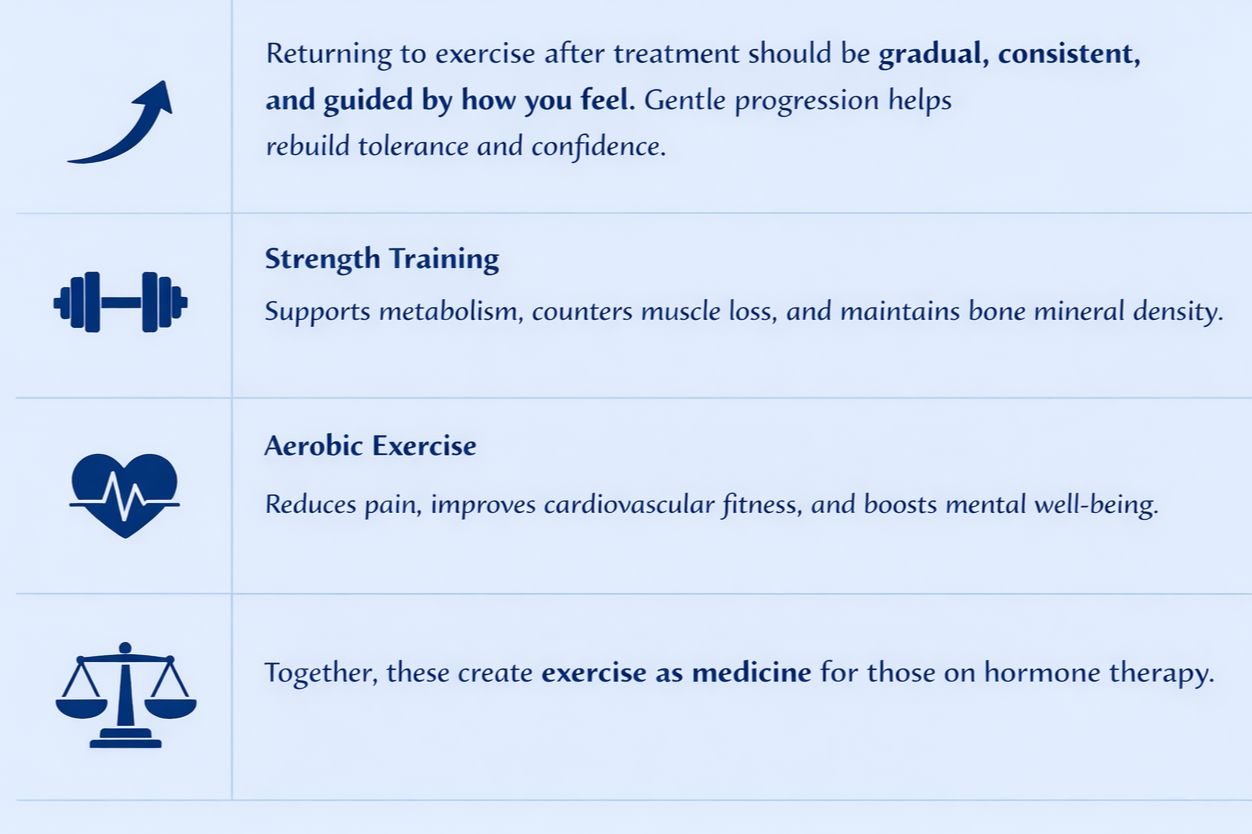
*Before starting any strength or bone building program please consider the following:
⚠️ Important Clinical Considerations (Cancer/Osteoporosis)
Avoid repetitive spinal flexion/twisting with load when with osteoporosis
Monitor fatigue
Modify impact/load if with Bone Metastasis or if you are a high Fracture Risk
Always consider our Safe Cancer + Exercise Guidelines
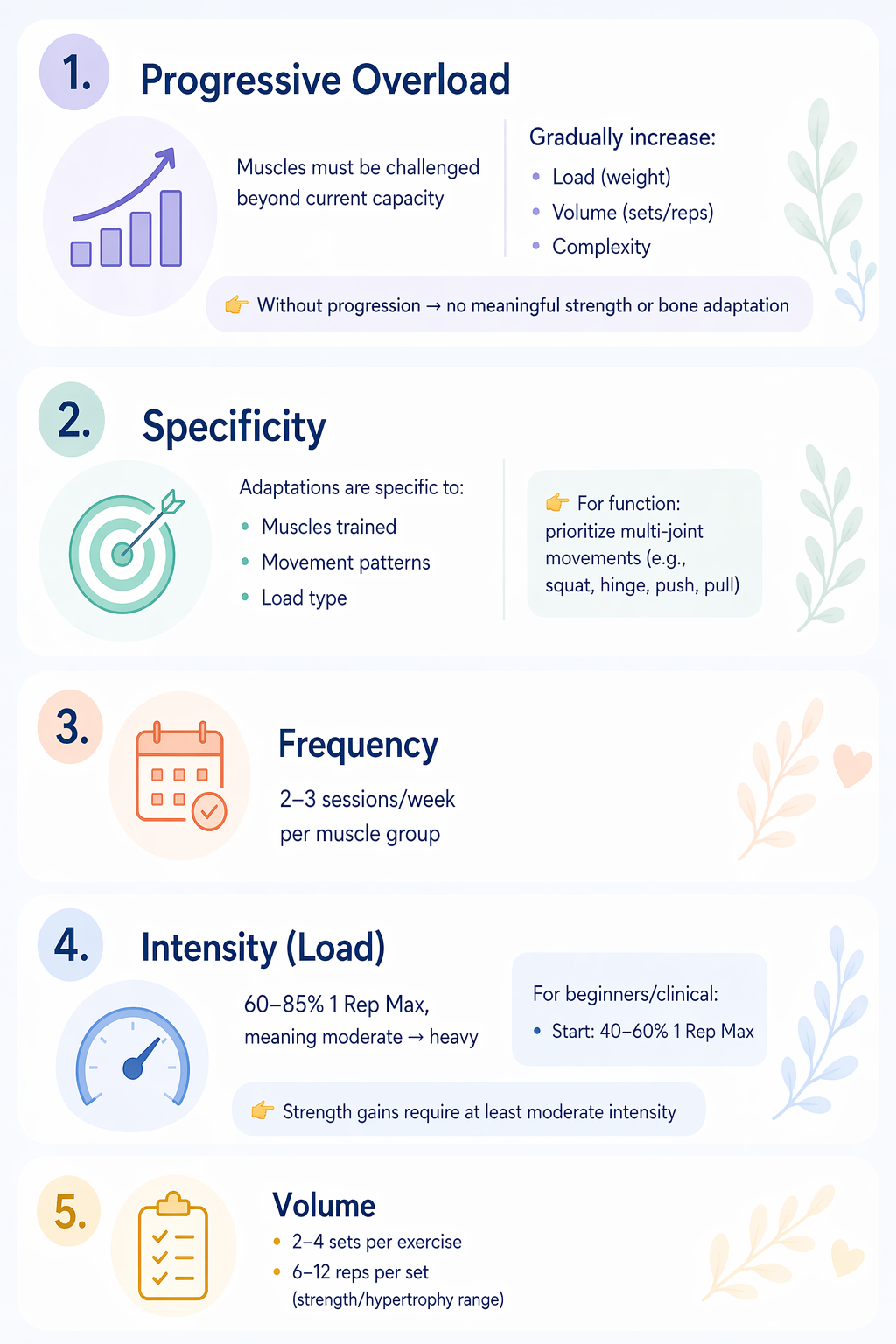
🏋️ Exercise as Medicine-Strength Training Principles
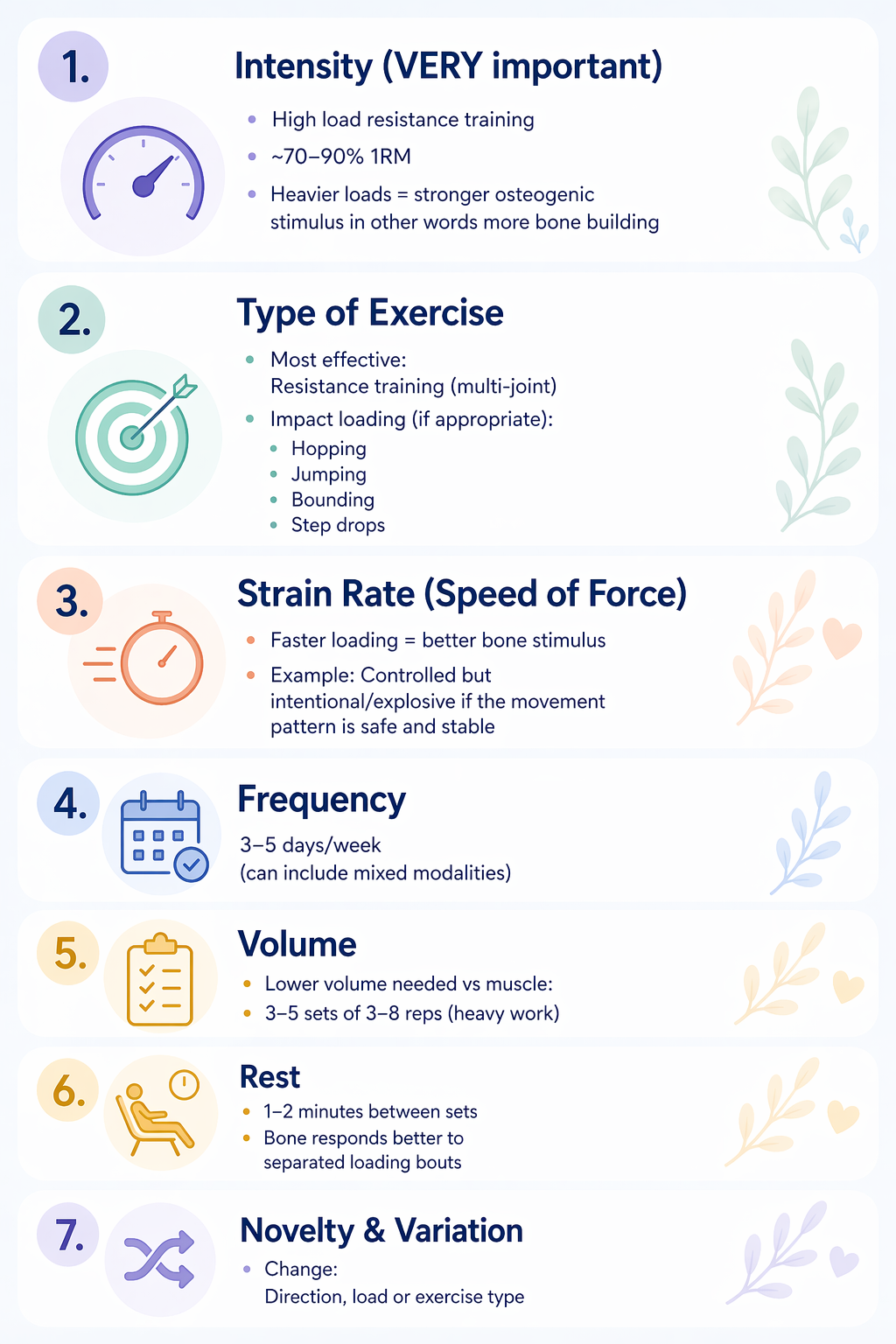
🦴 Exercise as Medicine- Bone Building Principles
Believe it or not, bone responds differently than muscle— bones need load + impact + novelty! The key Principle is the mechanical loading threshold, this means bone need stress and adapt when strain exceeds habitual levels.
👉 Bone becomes desensitized quickly to repetitive loading; bones like change!
A strength based exercise program might look different than a bone building program. Hence at the cancer physio, we design your program based on your goals. If you have bone metastasis, exercise will be different than if your goal is to prevent bone mineral density loss.
🏋️ Exercise as Medicine-Aerobic Training Principles
Aerobic exercise acts as medicine for pain management by improving circulation, reducing joint stiffness, and supporting overall mobility. Regular movement such as walking, cycling, hiking or swimming helps lubricate joints, which can decrease discomfort associated with stiffness and inactivity. It also stimulates the release of anti-inflammatory hormones and endorphins, which naturally reduce pain sensitivity and improve mood.
Over time, consistent aerobic activity can lower chronic inflammation levels, helping to manage conditions such as AIMSS- Aromatase Inhibitor associated Musculoskeletal Syndrome. It is a safe, accessible, and evidence-based approach for long-term pain relief and functional improvement for those with hormone sensitive breast cancer.
Aerobic Training Principles
For pain management, aerobic training is most effective when it is dosed at a moderate, sustainable intensity and progressed gradually.
Using Rating of Perceived Exertion (RPE out of 10), aim for:
RPE 3–4/10 (light to moderate): ideal starting point for sensitive or chronic pain states
RPE 4–6/10 (moderate): optimal range for building fitness, improving function, and driving anti-inflammatory benefits
Using heart rate (% of max):
50–65% HRmax: gentle aerobic base, suitable for early stages or severe AIMSS.
60–75% HRmax: effective therapeutic range for most pain management goals
🔑 Key Takeaways
start LOW + go SLOW (increase duration before intensity)
Aim for 3–5 sessions/week, starting with 15–40 minutes per session as tolerated
Stay below symptom flare thresholds (mild discomfort is acceptable, worsening pain is not)
👉 Consistency matters more than intensity for long-term pain reduction.
Further questions regarding exercise in various stages of treatment such as chemotherapy may be answered through my blog on Exercise as medicine for those with cancer. Here at the cancer physio, we aim to support patients through all 5 phases of a cancer journey. Personalized rehab planning specific to your goal, while taking into account the safe exercise guidelines allows for optimal rehab.
Cooling your body and using cold exposure are both very effective tools for managing the symptoms of hormone therapy. More so consistent adherence to a strength, bone building or aerobic program is also optimal for improved side effect management. My hope is these tools will help you feel just a bit more like yourself again.
Thank you for your interest in science and rehab.
Kindly, The Cancer Physio

A Note from The Cancer Physio:
With an aims to curate the latest science, and provide evidence rich tools, I think it is important to understand that not all questions can be answered and good science seeks to provide more questioning over time. I urge you to shy away from sweeping statements and soap box leaders with strong claims. Often new science is just around the corner.
Social media is full of ‘experts’ without credentials. There advice may be harmful. Please be careful.
On the other hand, often patients have been told a lot of ‘don’t statements’ through-out their journey; at times mitigating risk is important but one must always ask at what cost.
Every phase of treatment is unique and there for every new intervention is a personal decision.
Informed decision making = informed risk + possibility.
My ask is that you ask good questions too, as much as possible and keep them coming. One person’s story may have a lot of impact but probabilities are important too.
Unfortunately, there will not always be an obvious answer, but…
In the unknown try to remain curious, hopeful and even optimistic.
Keep the boundaries open a bit; you might just be a little surprised.
